TreeStation was appointed as the sole contractor on a flagship project to create a new riverside walk along the Mersey.
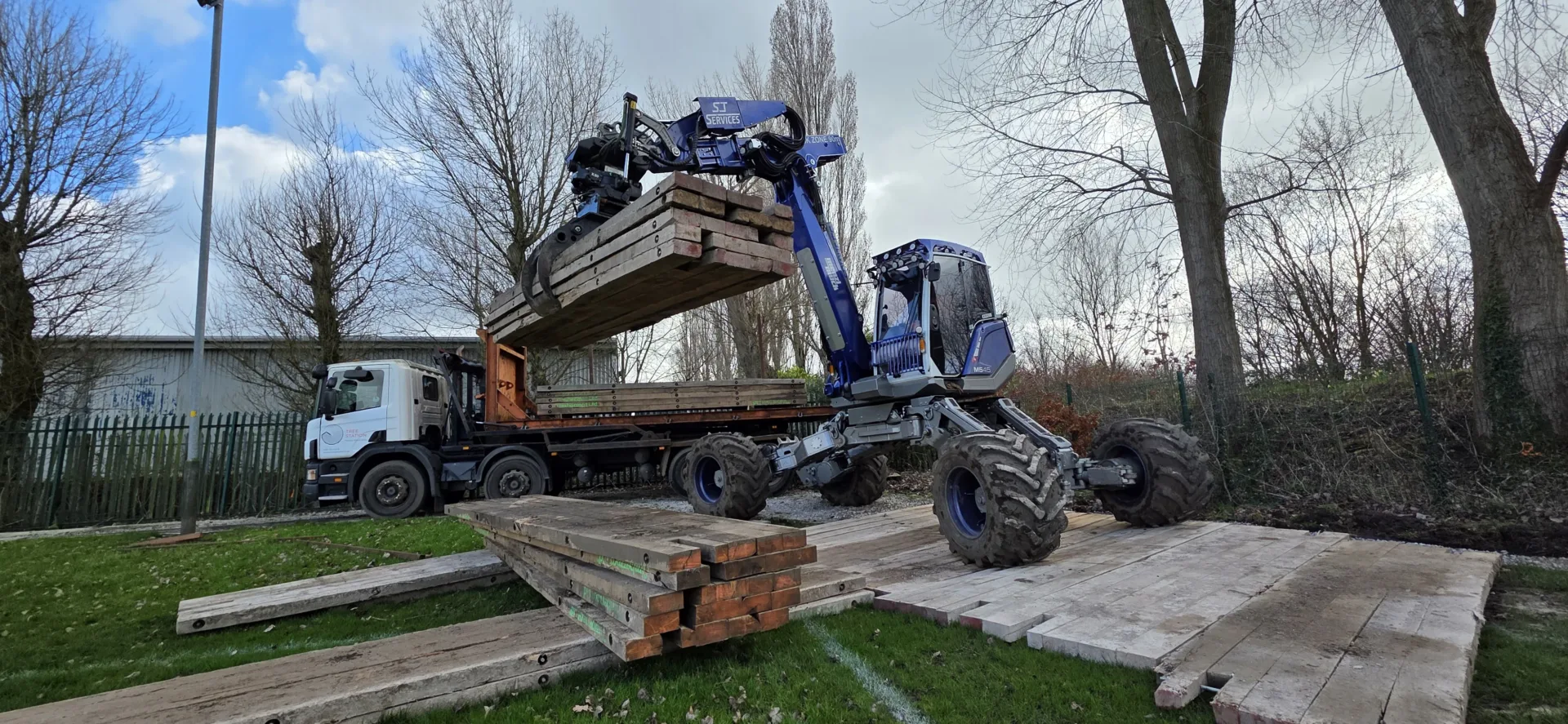
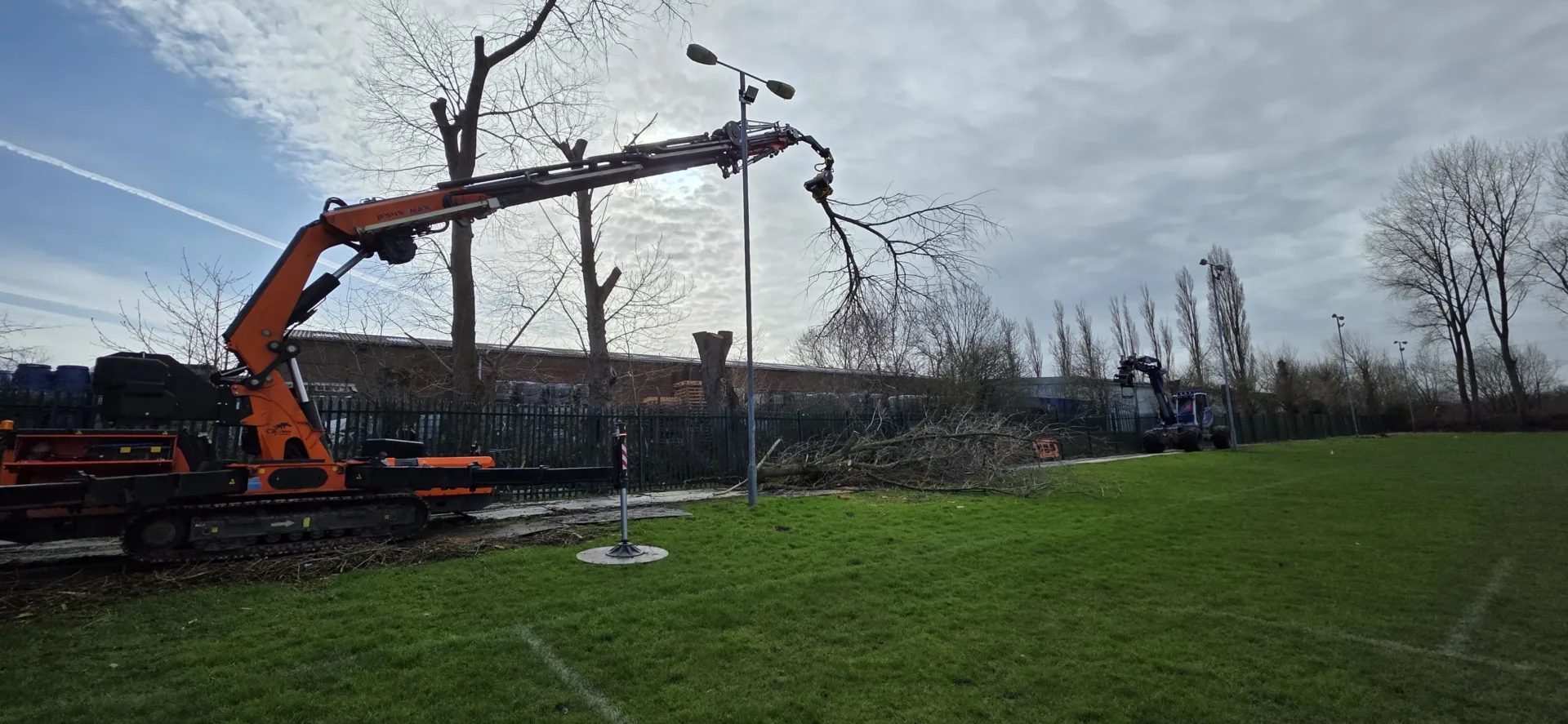
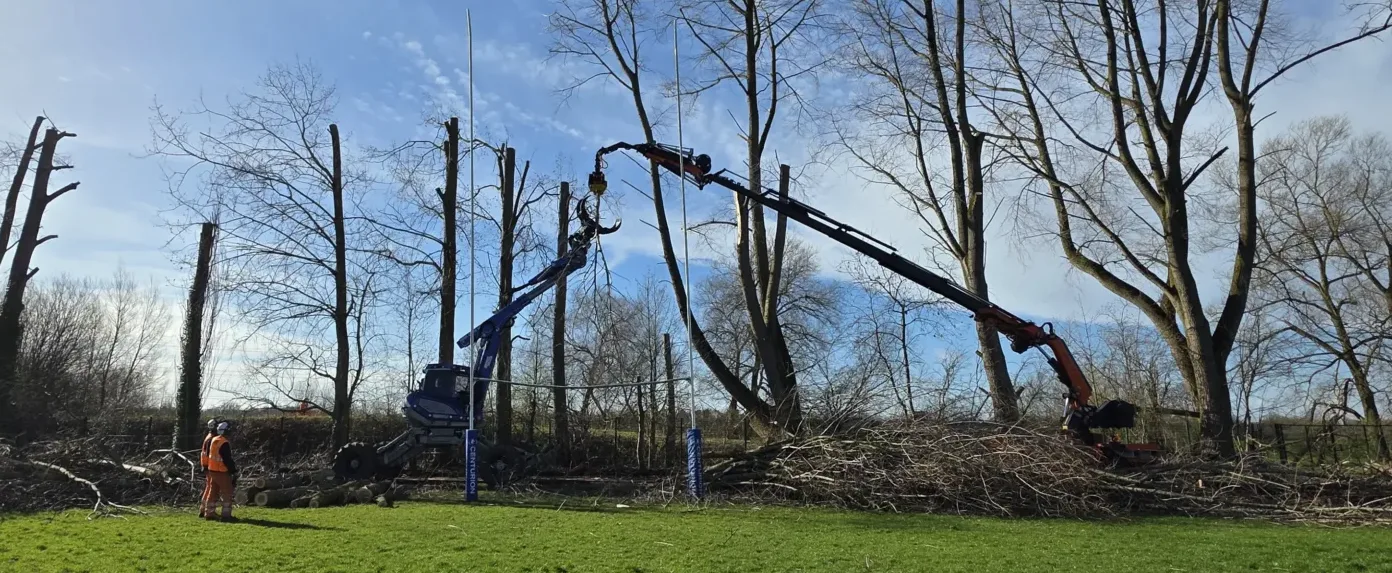
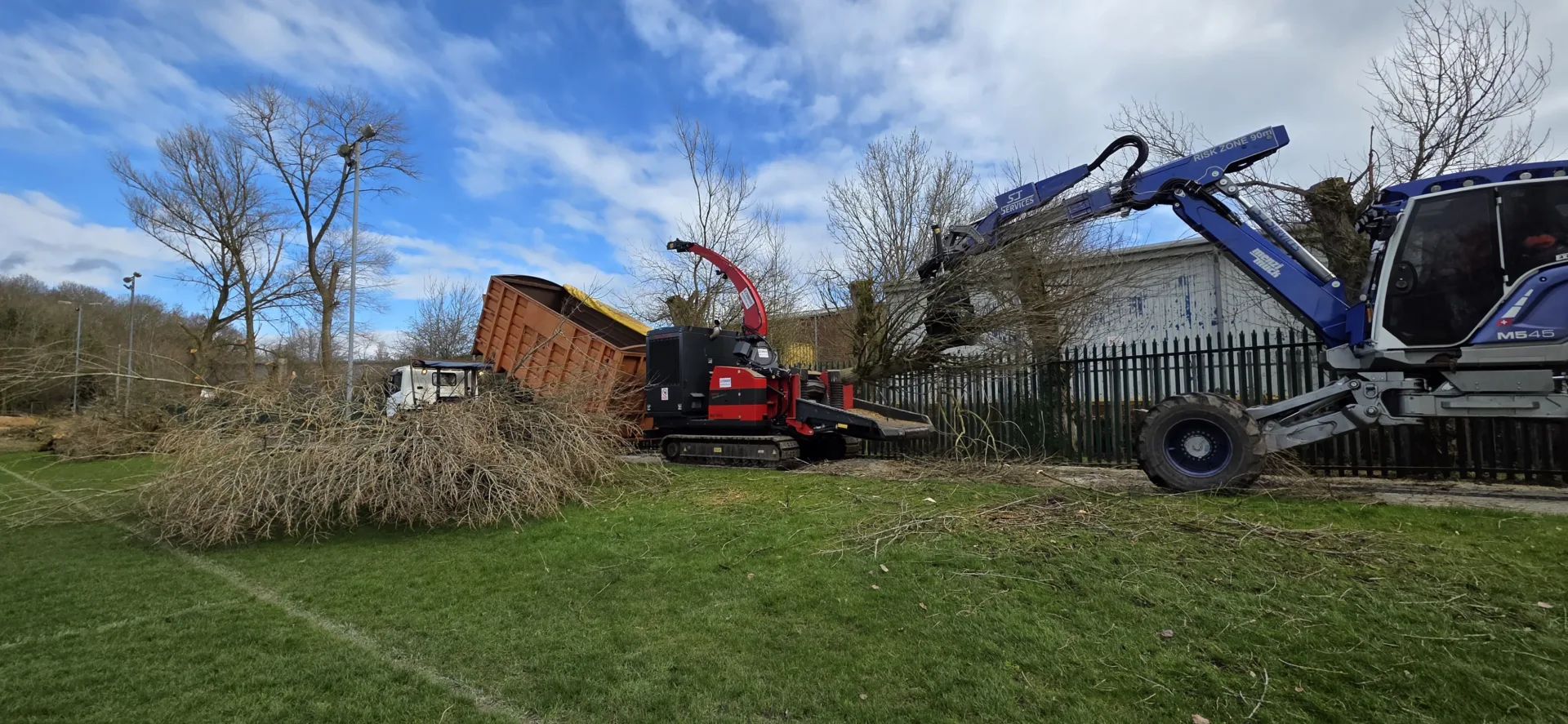
One of our biggest treework operations in recent times, we undertook a mixture of pruning, pollarding and monolithing works along a long line of around fifty (over)mature poplars on the border of the Mersey river path and Burnage Rugby Club. The job was made more straightforward thanks to being able to access the trees through the rugby club, but great care had to be taken not to damage the ground. We used some heavy-duty machines to extract some very large trees with impressive speed, using bog mats and road mats to protect the turf, this gargantuan task was completed in a matter of days.
Our work on the MVRP project has been one of the most varied and rewarding projects TreeStation has undertaken. Although our expertise in treework and landscaping provided the natural focus of activity, there were a range of less-than-usual aspects that it was a pleasure to deliver.
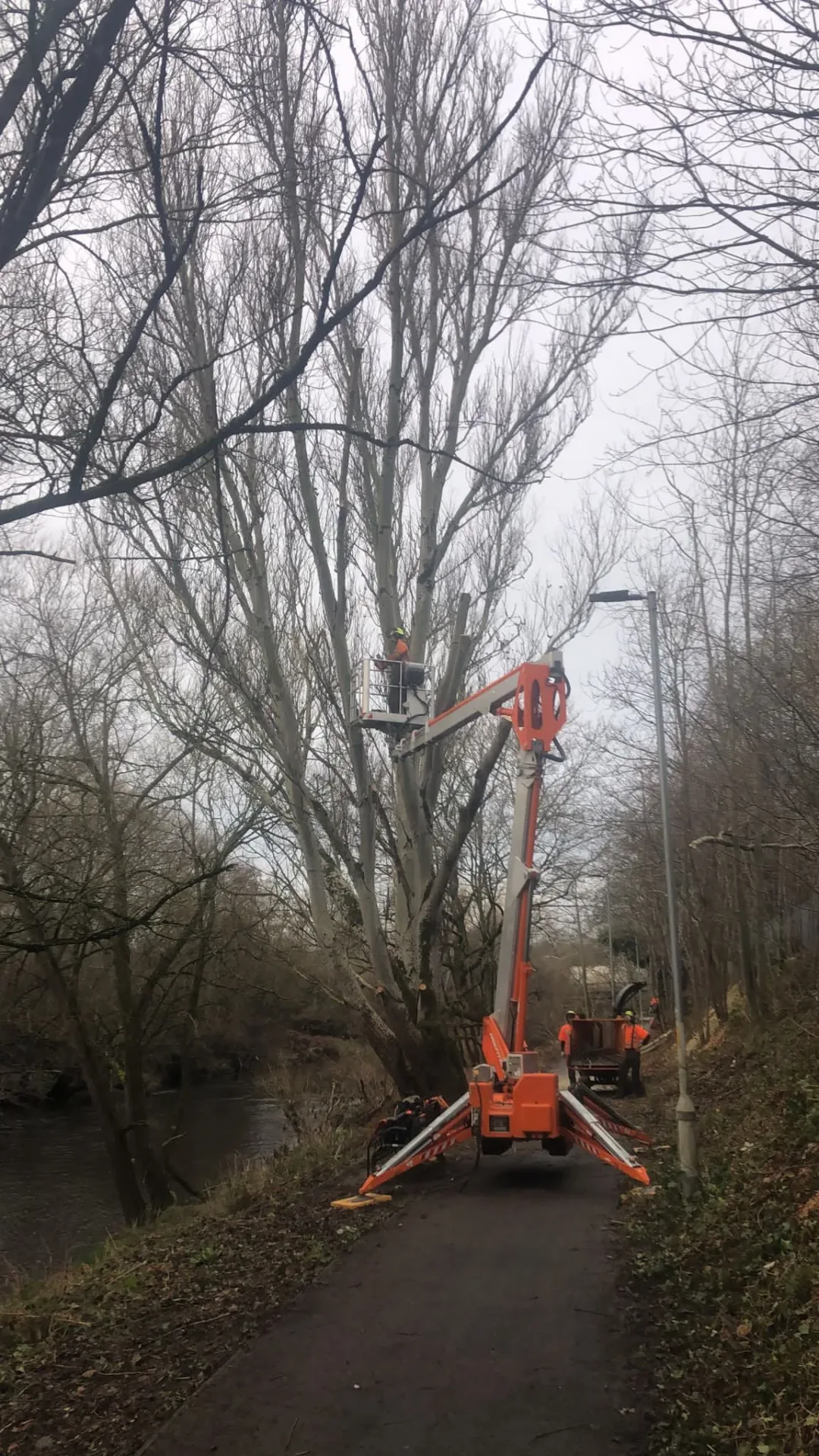
We liaised with the council to plan access to the path and arrange strategic closures which would allow us to undertake those works where closure was essential for safety, yet minimised disruption for users of the paths. Treework teams with MEWPs and climbers were deployed along the path to trim back overhanging trees to improve visibility, all done with just a handful of temporary path closures over a period of several months.
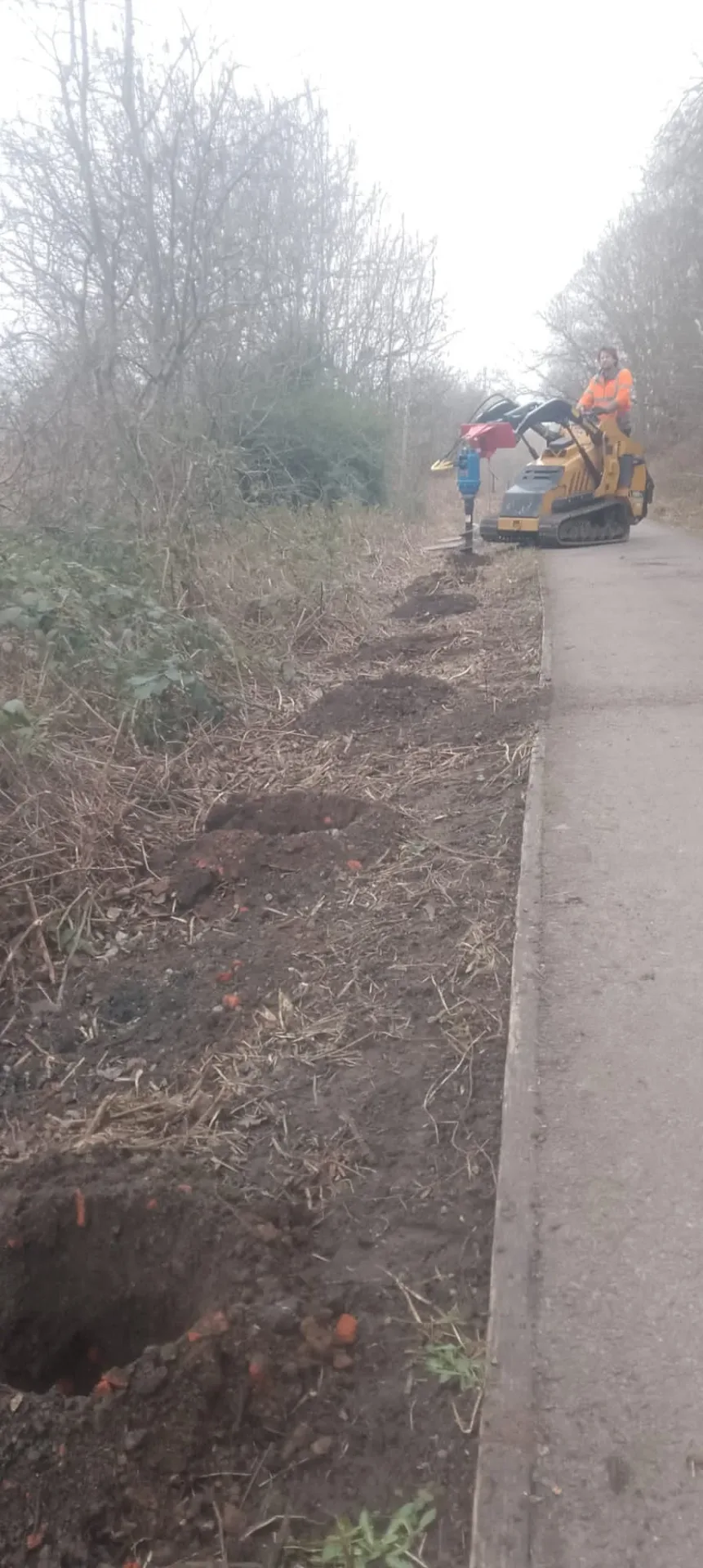
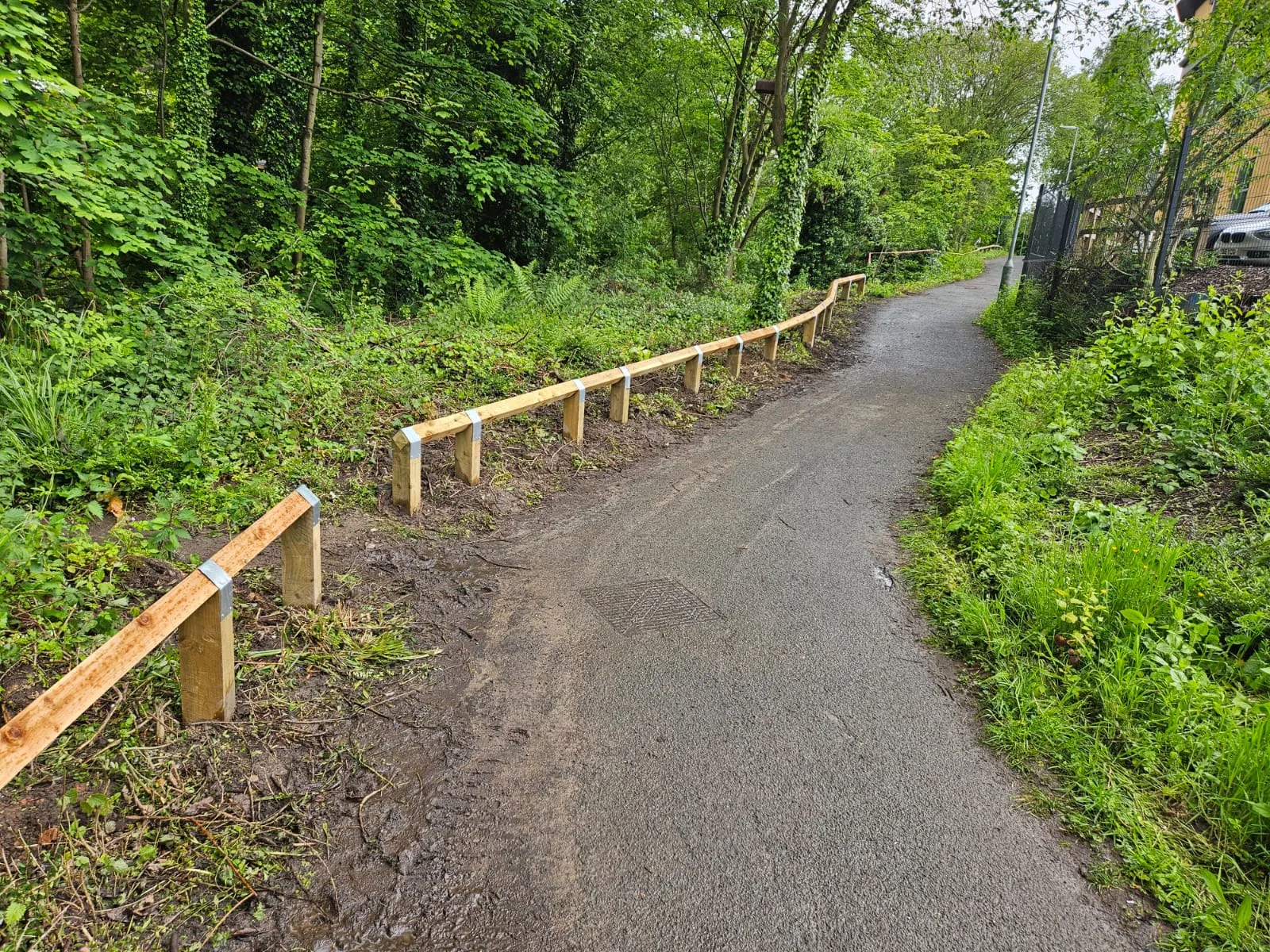
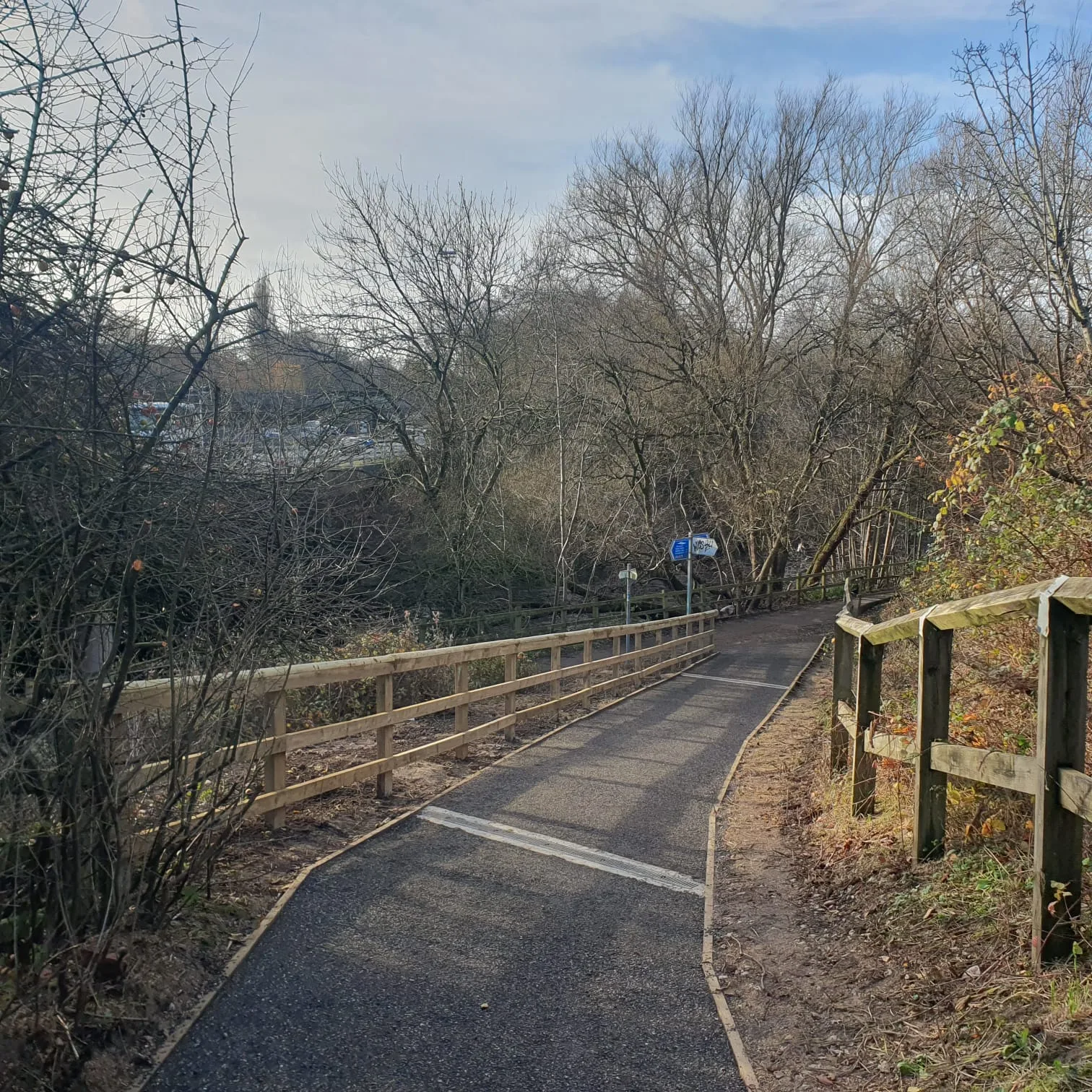
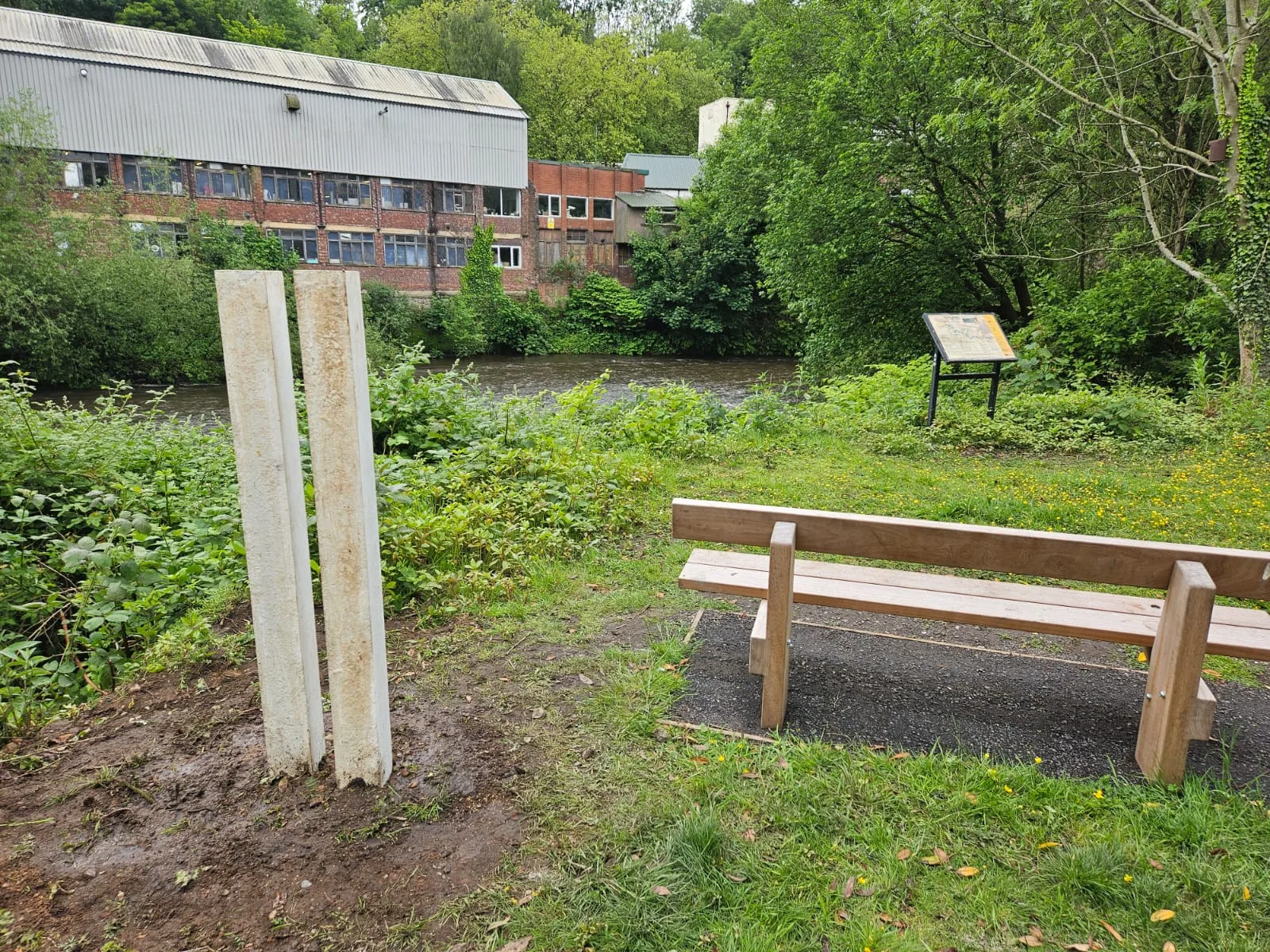
Our landscaping team resurfaced degraded sections of path, installed new fences and knee rails, and replaced signage. When digging became tough, we used our Skidsteer with an auger attachment to take some of the strain. At this stage of the work the team also installed the concrete foundation for the swift tower which was to be erected later in the project.
Approximately 50 mature poplars were earmarked for pruning, pollarding or monolithing in the most intensive phase of work along the path. We liaised with Burnage Rugby Club to arrange access and agree on site restrictions and ground protection measures. Close to 200 linear metres of bog and road mats were installed to protect the ground and facilitate machine access for a Jekko tracked spider crane, a Menzi Muck forestry spider excavator and a whole tree tracked woodchipper. Hiring in capable machines and using our own expertise enabled this gargantuan task to be completed in a matter of days.
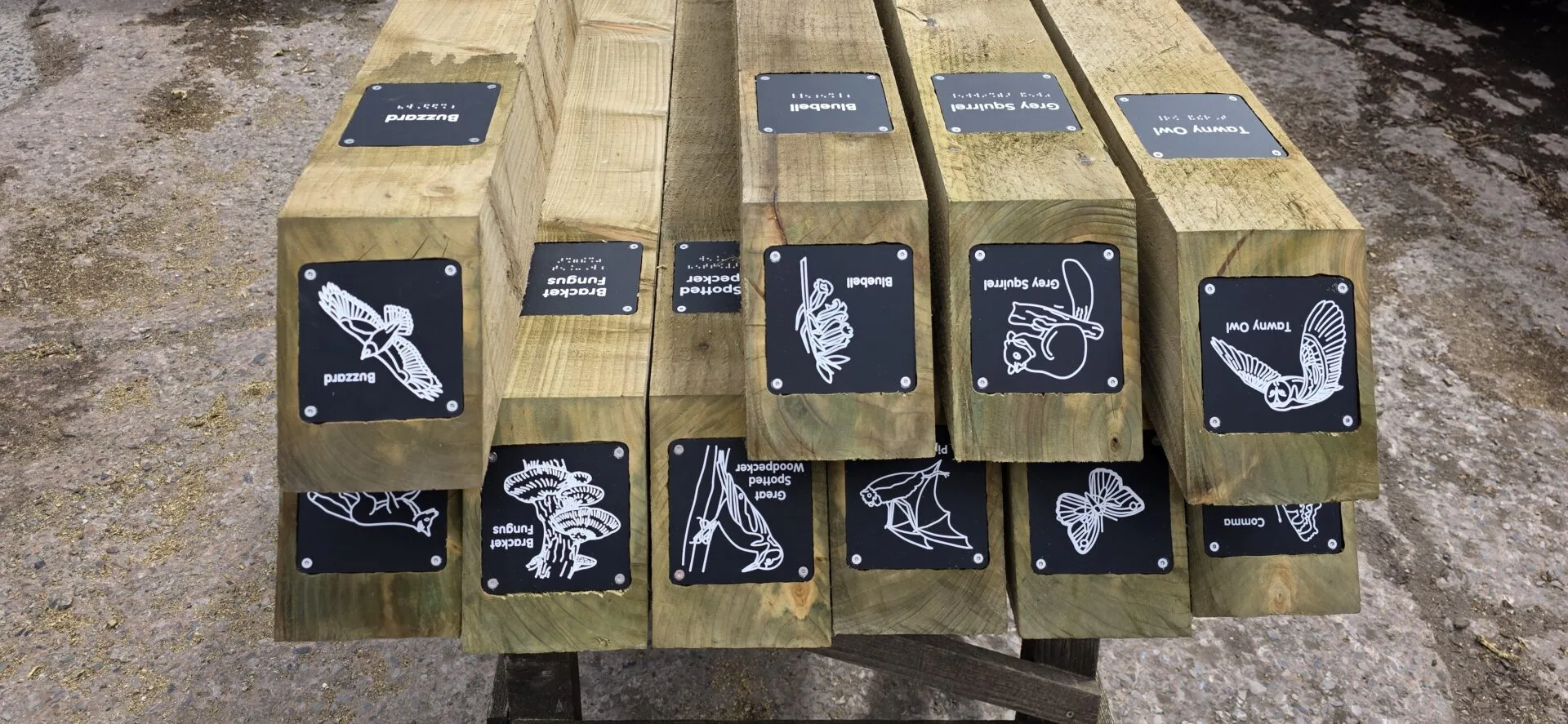
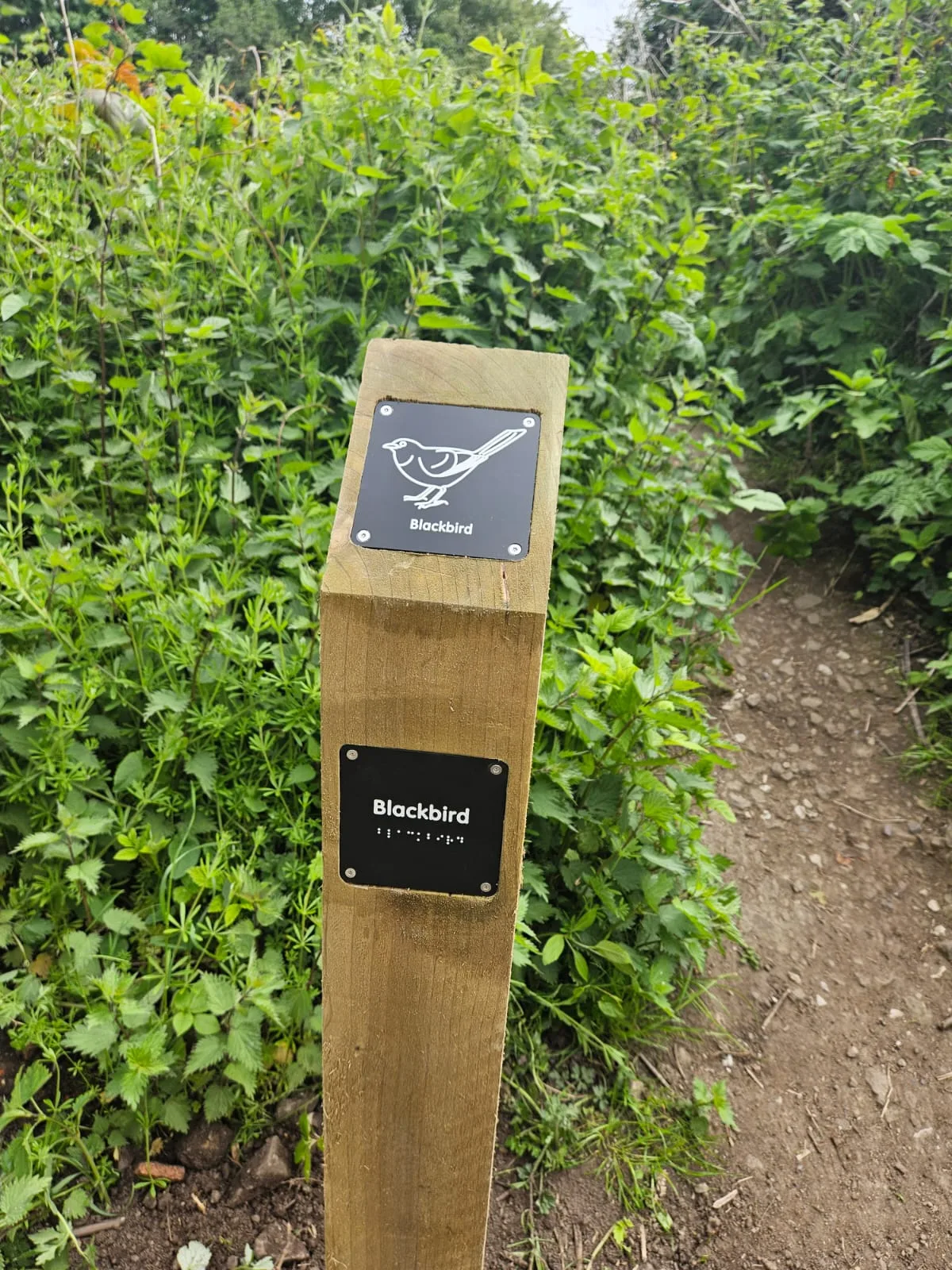
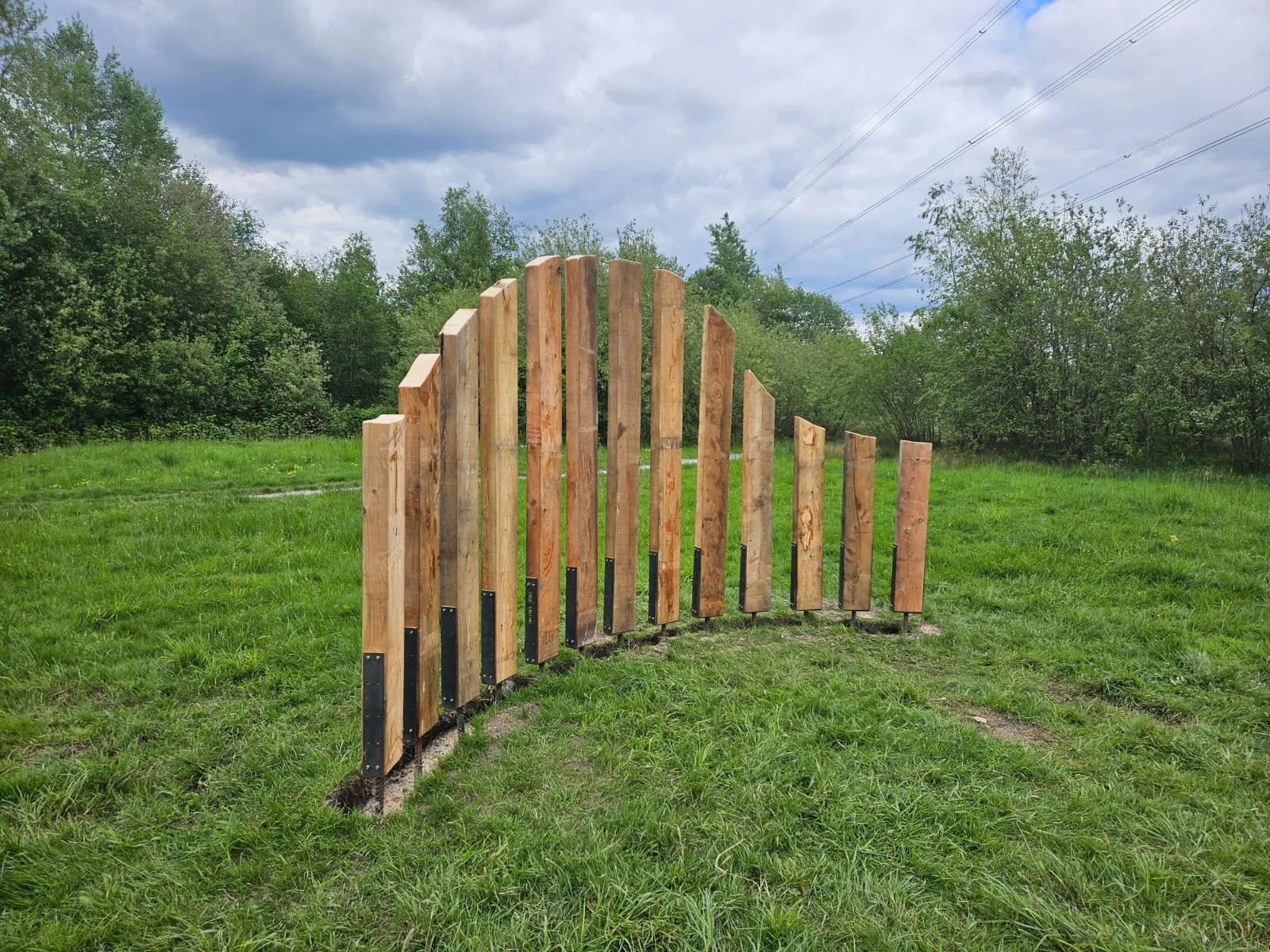
Meanwhile, the tree and landscaping teams were hard at work enhancing the riverside for wildlife in a number of ways to create additional habitat for birds and insects, as well as improvements for public enjoyment. These included: installing an insect habitat sculpture; putting up bird, bat, owl and insect habitat boxes; revitalising a pond by clearing encroaching vegetation and reducing leaf litter; making changes to barriers to improve accessibility; installing benches and carrying out treework to open up river vistas; managing vegetation to maintain paths, both by hand and using the Bomford robo-flail; replacing knee rails and fencing to improve safety; installing new interpretation boards, a nature trail, and wayfinding signage; carving and mounting new chainsaw-carved acorn sculptures; and path resurfacing to improve access.
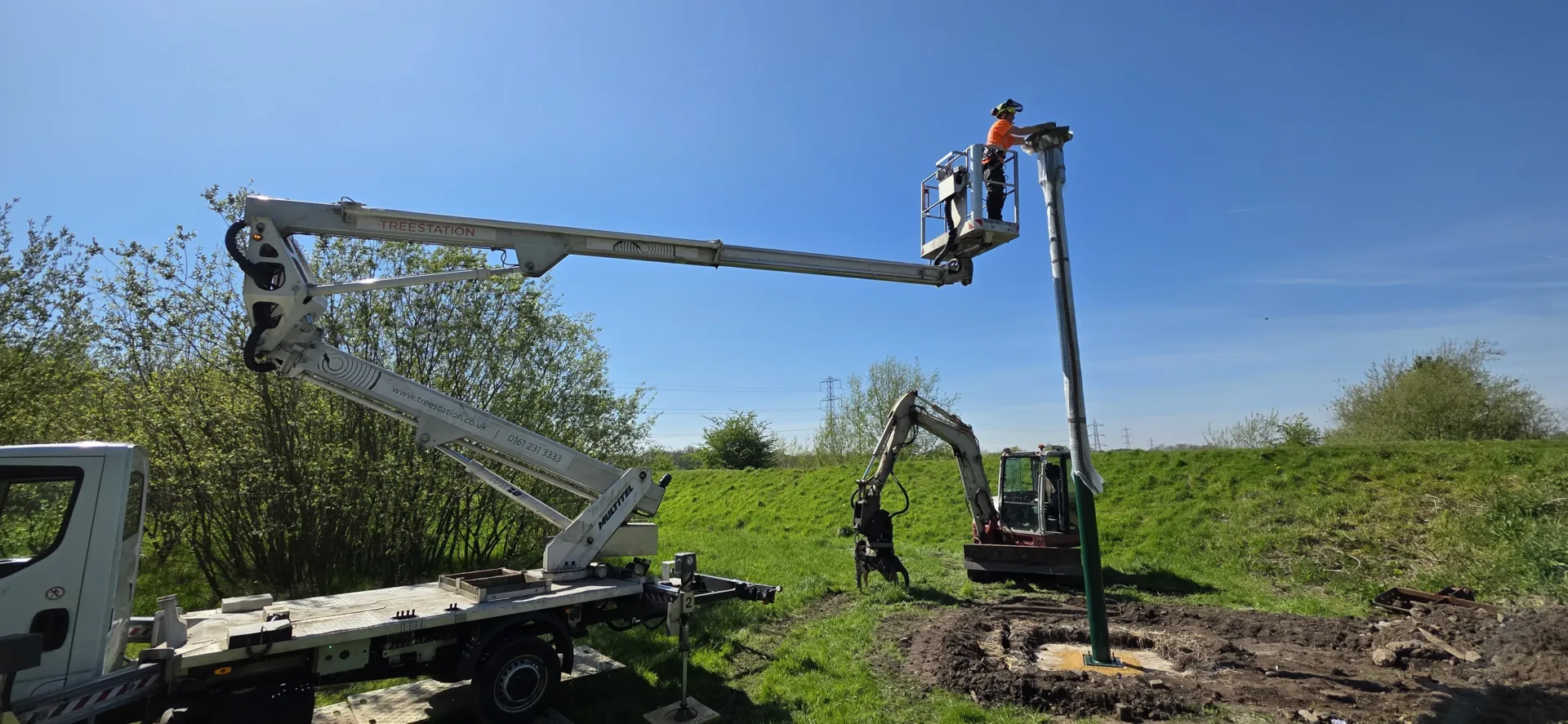
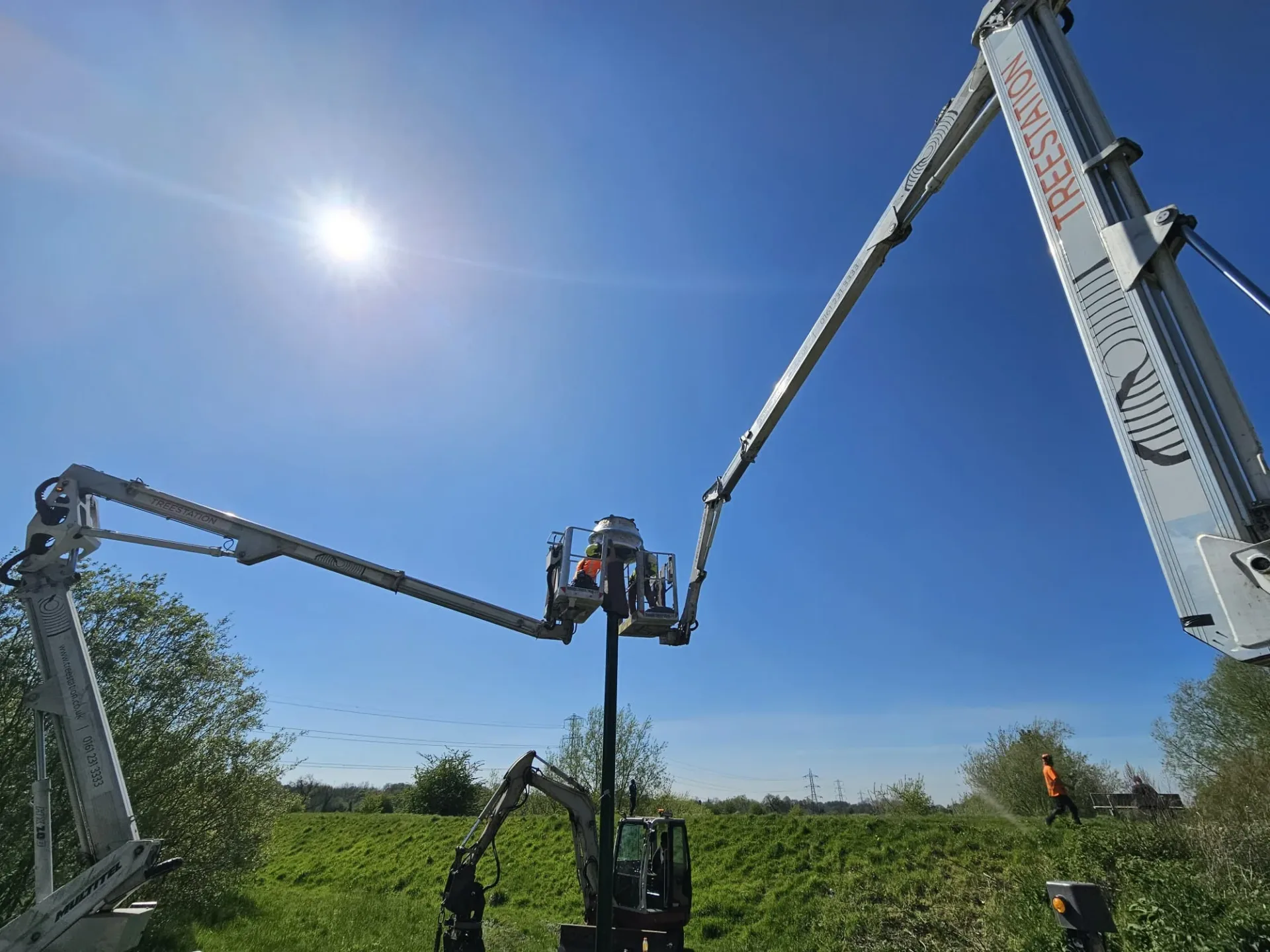
Lastly our arboriculture and landscaping teams came together with 2 MEWPs and our Takeuchi excavator to erect and commission the artist-designed swift tower sculpture, which will provide a much-needed resting place for the migratory birds.
The work was completed on budget and in time for the deadline, when an official opening event and press invitation was due. Our clients were extremely pleased with the high standards of the treework and environmental upgrades. The project can be held up as a successful first installment of the National River Walks scheme.