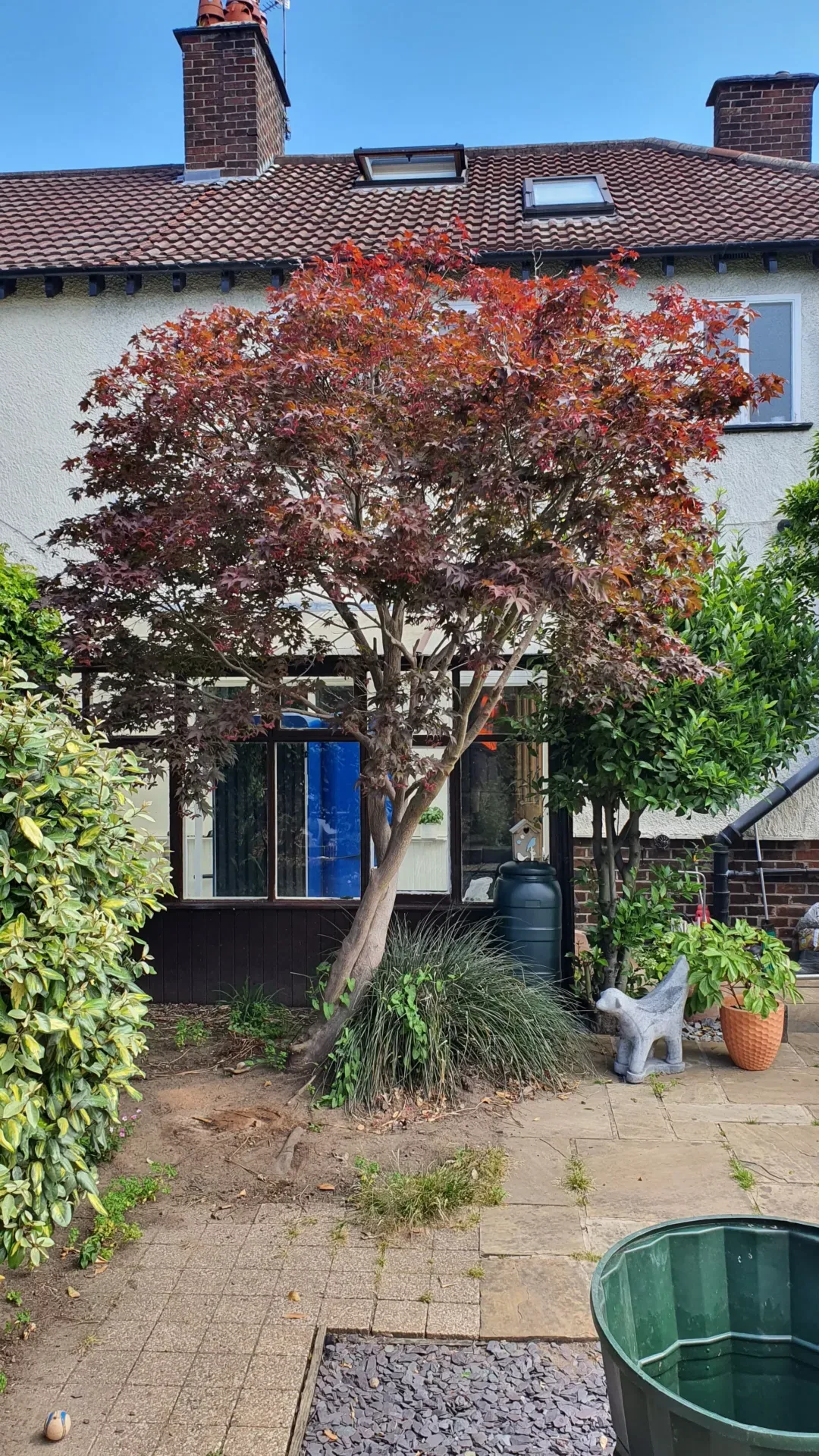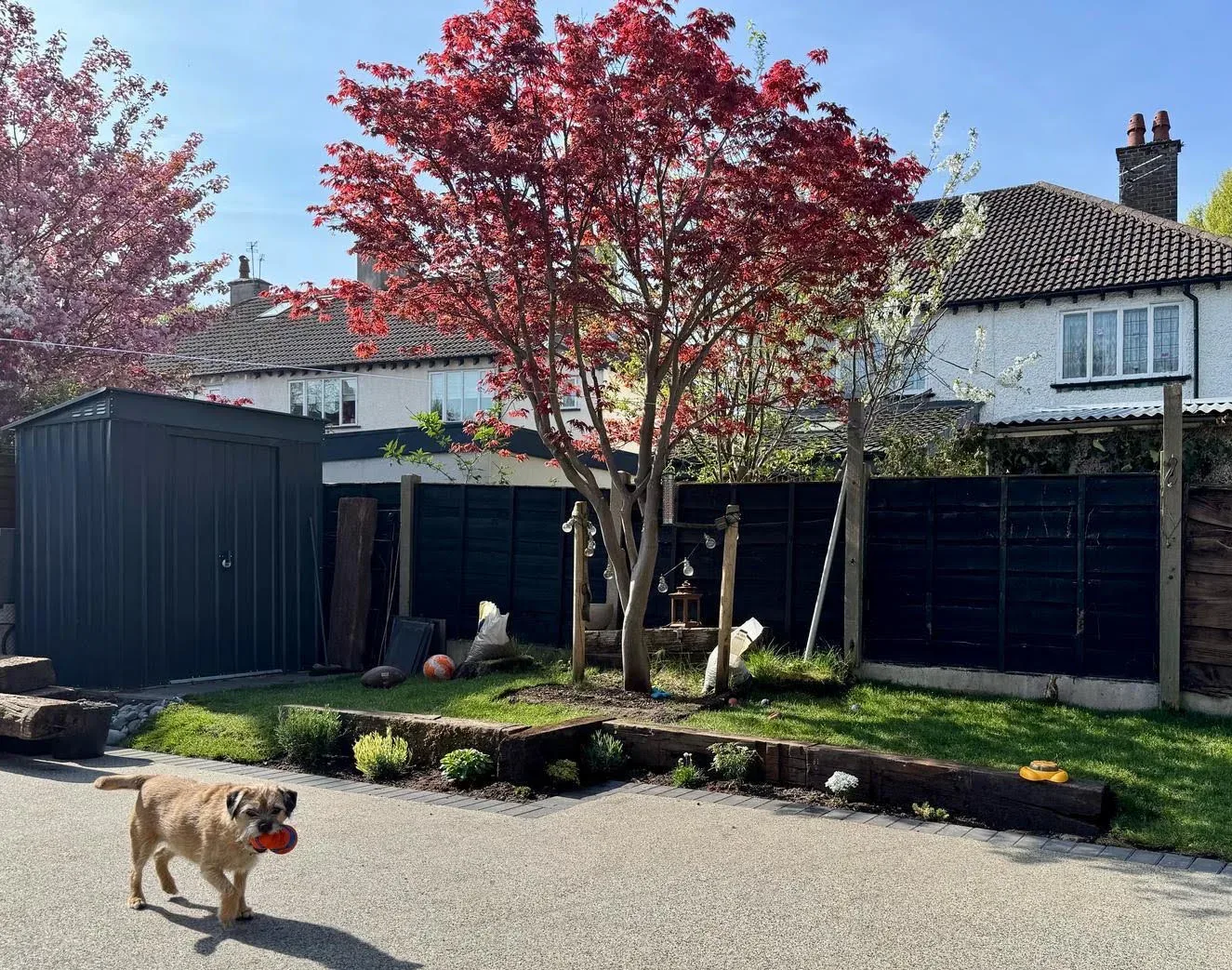
The customer’s much-loved Japanese acer needed relocating, a challenging request on a sensitive well established tree.
We discussed the practicality of moving an established tree with the client, explaining what is required to undertake such a move, and a timescale was agreed that would allow us to prepare the tree properly and give the tree the highest chance of a successful transplant.
The first visit in early spring involved a sensitive crown reduction to decrease water demand on the root system, then we severed a quarter of the roots on opposite sides of the tree, approximately 0.5m from the stem. The excavation was backfilled with sand to encourage fibrous root growth which would help the tree to survive the move. This would allow the tree to continue feeding with the unsevered roots, whilst forming the newer, more dense feeding network closer to the stem which could be moved with the tree to the new location.
We returned 3 months later, in late July to sever the remaining two quarters of the roots, again backfilling the excavation with sand. In the time since the first visit the tree should have grown enough new fibrous root on the previously severed roots, which combined with the crown reduction work to reduce water demand, should allow it to survive this process.
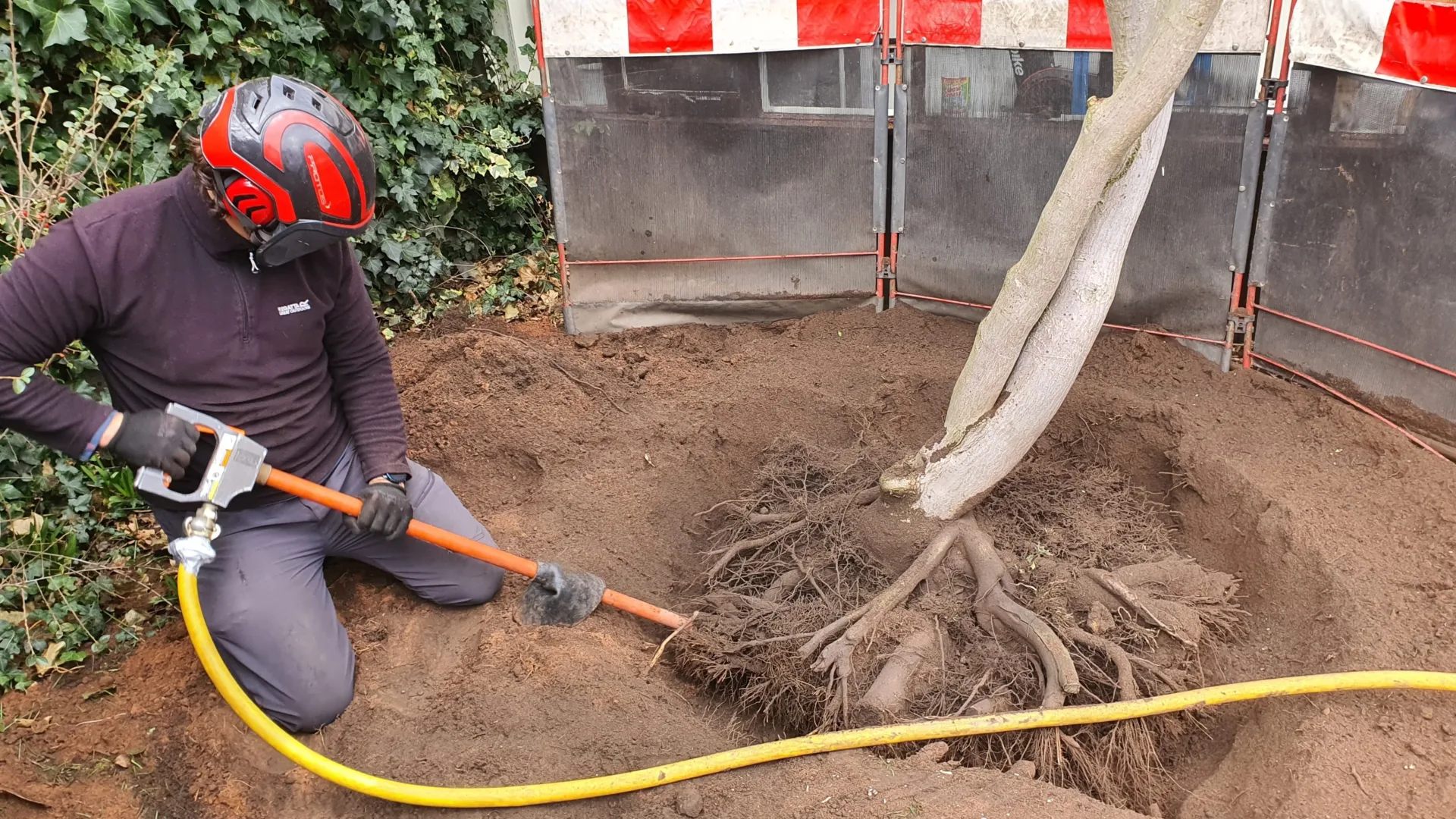
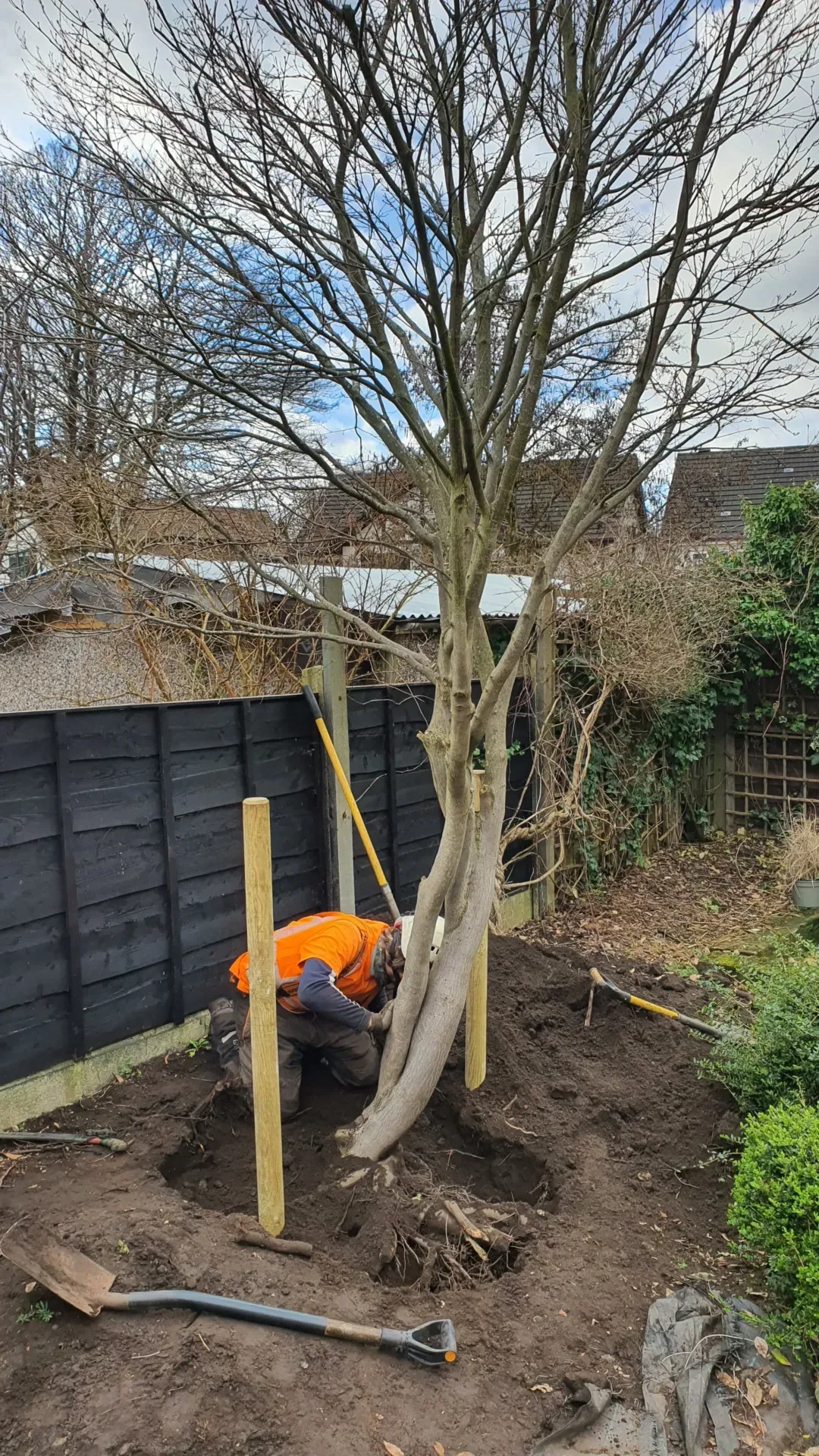
The third and final visit was undertaken in February of the following year. By this time the tree had had a whole growing season to develop a dense fibrous root system close to the stem that could be moved to it's new location. We used an air spade to carefully remove soil from the roots of the tree without damaging this delicate root system, before moving it to its new location.
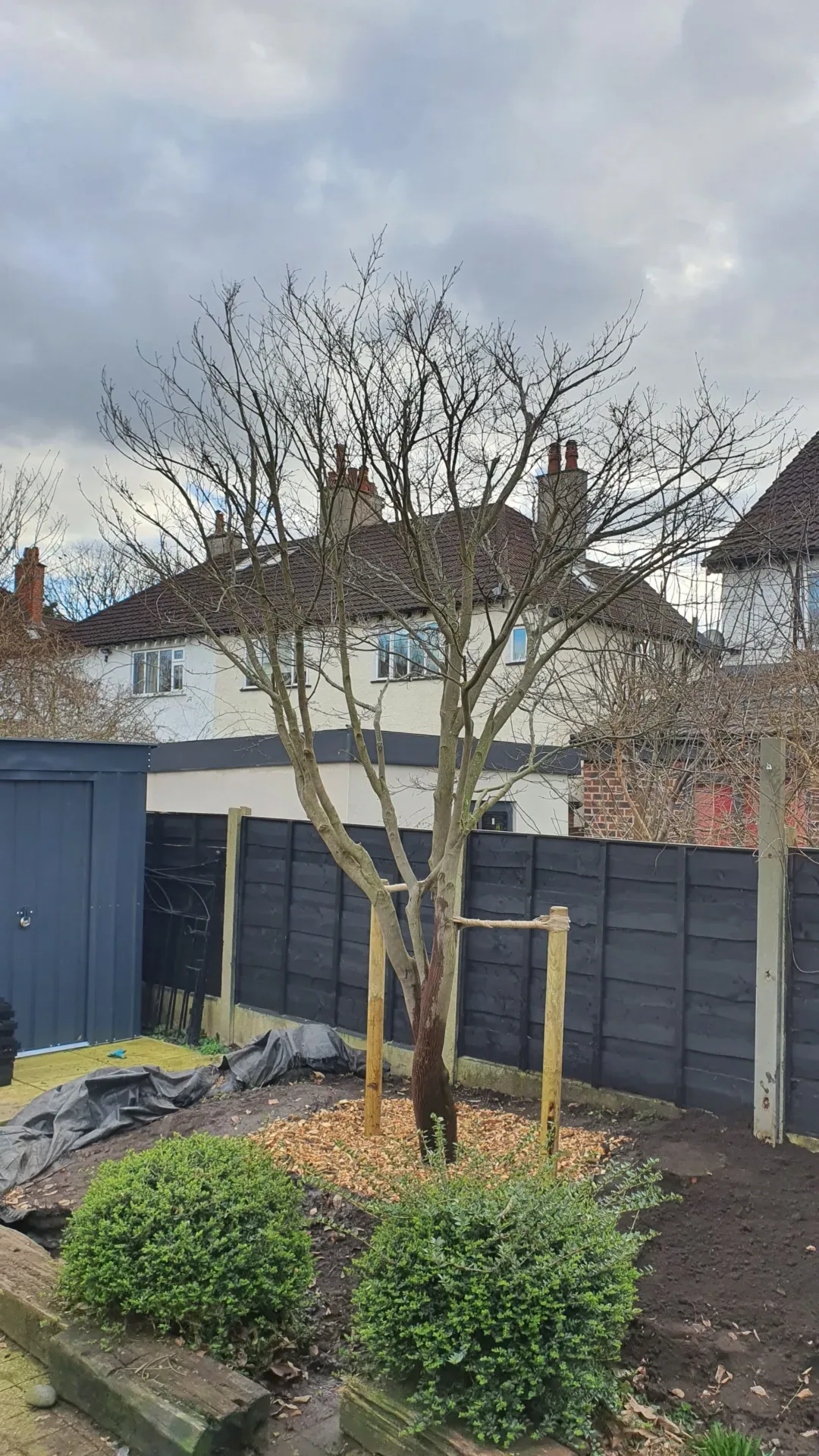
Finally the tree was supported with stakes and ties in its new location, a thick layer of woodchip mulch applied to retain moisture in the rootzone and slowly release nutrients over time, and a good dose of watering applied and prescribed for the coming growing season.
The tree was successfully transplanted to its new location at the end of the garden, allowing the planned extension to go ahead. Due to the careful preparation of the tree before transplantation, it survived the move and is now thriving in its new position.